
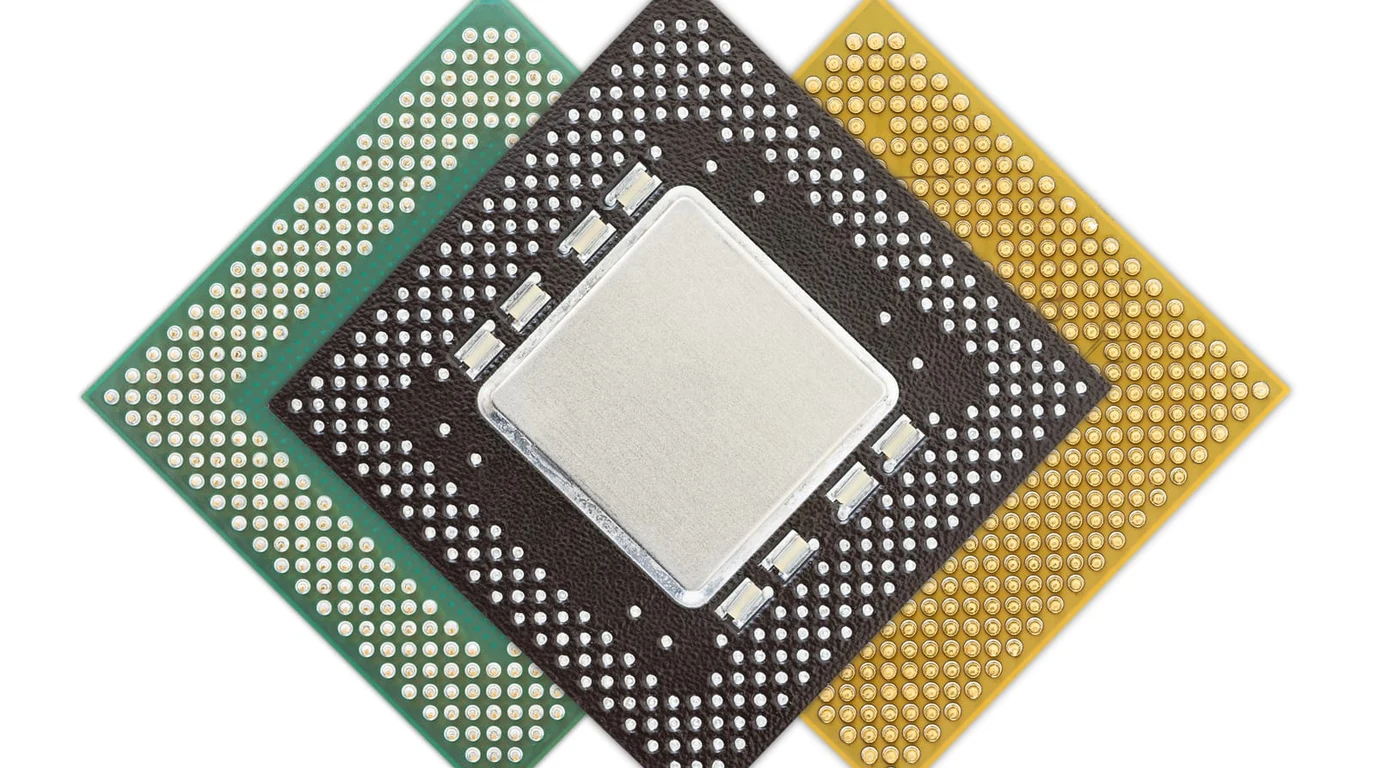
In the unforgiving operational domain of industrial edge AI, tactical unmanned aerial vehicles (UAVs), remote wildlife tracking arrays, and battery-powered intelligent security cameras, the physics of edge computing impose an unyielding law: thermal dissipation and electrical power budgets are absolute boundaries. While hyperscalers and client PC manufacturers boast about 50-TOPS accelerators that draw 15 to 30 Watts under peak loads, field engineers deploying edge nodes inside sealed IP67 enclosures, solar-powered environmental monitors, and micro-robotics must operate within total system budgets under 5 Watts—and frequently sub-1 Watt. In this ultra-low-power silicon arena, running heavy transformer models or continuous multi-stream computer vision without active cooling fans requires specialized Neural Processing Units architected specifically for extreme TOPS-per-Watt and Joules-per-Inference efficiency. Two cutting-edge architectures dominate this low-power embedded frontier: the Kneron KL720, featuring a reconfigurable neural processing architecture operating at an astounding 0.9 Watts, and the Hailo-8, a high-density structure-driven neural network processor delivering a massive 26 TOPS at approximately 2.5 Watts. Here is Kieran Mercer’s forensic engineering teardown of the Kneron KL720 versus Hailo-8, dataflow architectures, ResNet-50 and YOLOv8 benchmark performance, thermal dynamics, and industrial deployment Total Cost of Ownership (TCO).
How Do Kneron KL720 and Hailo-8 Differ in Silicon Architecture?
To understand the profound divergence in performance and efficiency between these two edge silicon marvels, engineers must examine their fundamentally different architectural solutions to the memory and data-movement bottlenecks that govern deep neural inference:
- Kneron KL720 Reconfigurable Dataflow Architecture: Traditional NPUs feature fixed hardware pipelines: whether executing a 3×3 convolution, a depthwise separable convolution, or a transformer self-attention block, data must conform to static vector execution lanes. Kneron pioneered a reconfigurable dataflow architecture. The physical MAC units, internal routing switches, and on-chip SRAM blocks dynamically rewire their internal data paths on a layer-by-layer basis during inference. If a convolutional layer requires high parallel spatial filtering, the hardware forms a 2D systolic grid; when transitioning to a fully connected or attention layer, the hardware instantaneously reconfigures into a high-throughput streaming pipeline. This eliminates idle silicon logic, slashes internal clock cycles, and allows the KL720 to achieve 1.4 TOPS of INT8 compute (or up to 4.0 equivalent effective TOPS) while dissipating only 0.9 Watts.
- Hailo-8 Structure-Driven Neural Network Architecture: Rather than executing instructions sequentially or reconfiguring pipelines dynamically, Hailo took a radical structural approach. The Hailo-8 silicon contains a massive, uniform 2D fabric of tiny, distributed computational units (MACs, ALUs) tightly interleaved with distributed local memory blocks. During compilation, the Hailo Dataflow Compiler literally maps the layers of the neural network graph directly onto the physical geography of the chip. Layer 1 calculates on Block A, passing activations directly across silicon wires to Block B for Layer 2. Data flows through the chip like water through a pipe, completely eliminating external memory bus access during inference. This structure-driven paradigm delivers an astonishing 26 TOPS at 2.5 Watts, achieving up to 10.4 TOPS per Watt in vision tasks.
Empirical Benchmarks: TOPS, FPS/Watt, and Latency Teardown
| Architectural & Benchmark Metric | Kneron KL720 | Hailo-8 (M.2 Module) | Google Coral Edge TPU | NVIDIA Jetson Nano |
|---|---|---|---|---|
| Peak Hardware TOPS | 1.4 TOPS (INT8) | 26.0 TOPS (INT8) | 4.0 TOPS (INT8) | 0.5 TOPS (FP16 Maxwell) |
| Typical Power Consumption | 0.9 Watts | 2.5 Watts | 2.0 Watts | 5.0 to 10.0 Watts |
| ResNet-50 Benchmark (FPS) | 110 FPS | 1,060 FPS | 390 FPS | 36 FPS |
| Efficiency (ResNet-50 FPS/Watt) | 122 FPS / Watt | 424 FPS / Watt | 195 FPS / Watt | 3.6 FPS / Watt |
| YOLOv8s Latency (640×640) | 16.8 ms | 3.2 ms | 8.5 ms | 48.0 ms |
| Multimodal Processing (Audio/Vision) | Native Audio DSP + Vision NPU | Vision Specialized Dataflow | Vision / Matrix only | General CUDA compute |
| Host Interface | USB 3.1 Gen1 / PCIe Gen2 / SPI | PCIe Gen3 x4 / M.2 2280 / 2242 | PCIe Gen2 x1 / USB 3.0 | Integrated SoC bus |
| Operating Temperature Rating | -40°C to +85°C (Industrial) | -40°C to +85°C (Industrial) | -20°C to +70°C | 0°C to +80°C |
Vision & Audio Multimodal Workloads: ResNet-50, YOLOv8, and Acoustic Telemetry
When analyzing empirical benchmark metrics, the distinction between high-density vision throughput and energy-constrained multimodal sensing becomes unmistakable:
- Hailo-8 Vision Dominance: In pure computer vision pipelines, the Hailo-8 is an unrivaled powerhouse. Generating over 1,060 FPS on ResNet-50 and processing full 640×640 YOLOv8s frames in an astonishing 3.2 milliseconds, a single Hailo-8 M.2 module can ingest and analyze 16 to 24 uncompressed 1080p RTSP camera streams simultaneously. It extracts bounding boxes, facial embeddings, and license plate characters without breaking a sweat, operating at a peerless 424 FPS per Watt.
- Kneron KL720 Multimodal Supremacy: While the Hailo-8 is engineered as a dedicated vision engine, the Kneron KL720 integrates an on-die Cortex-M4 control core paired with specialized audio processing DSP blocks alongside its reconfigurable vision NPU. The KL720 natively processes 4K video streams (up to 30 FPS on MobileNet-SSD) while concurrently running acoustic keyword spotting, acoustic glass-break detection, and voice command recognition. Because it operates at 0.9 Watts, the KL720 can run continuously on small lithium-ion batteries or PoE (Power over Ethernet) lines without generating thermal hot spots.
Thermal Dissipation, Form Factors, and Industrial Reliability
Deploying AI accelerators in real-world industrial environments—such as oil and gas monitoring stations, agricultural drones, and automotive edge boxes—means operating in harsh conditions where ambient temperatures routinely fluctuate between -40°C and +85°C. In sealed, fanless housings exposed to direct solar radiation, thermal management dictates system survival.
The thermal characteristics of these two chips dictate their physical packaging:
- Hailo-8 Thermal Design: Dissipating 2.5 Watts under full 26-TOPS load, the Hailo-8 generates sufficient heat to require a dedicated thermal conductive path. Commercial Hailo-8 M.2 2280 and 2242 modules include a pre-installed aluminum heat spreader designed to interface directly with carrier board thermal pads. In fanless industrial PCs, the chassis wall must absorb approximately 3 to 4 Watts of combined module heat to maintain junction temperatures below 85°C.
- Kneron KL720 Zero-Heatsink Operation: Because total package dissipation remains under 0.9 Watts even during concurrent vision and audio inference, the KL720 can be deployed on compact 4-layer PCBs without active cooling or heavy aluminum heatsinks. The chip operates reliably inside sealed polycarbonate IP67 enclosures, making it the premier choice for covert surveillance, body-worn cameras, and lightweight drone payloads where every gram of weight reduces flight endurance.
Kieran Mercer’s Industrial Edge AI Selection and Deployment Playbook
Follow this 5-point engineering checklist to select, compile, and deploy the optimal edge accelerator for your embedded infrastructure:
- Assess Electrical & Thermal Boundaries:
- If total subsystem power is constrained to < 1.5 Watts (battery-powered, solar, or parasitic harvesting), select the Kneron KL720.
- If 3 to 5 Watts of power is available and the workload demands processing >= 8 concurrent video streams or high-framerate (>60 FPS) tracking, select the Hailo-8.
- Model Quantization & Toolchain Validation:
- For Hailo-8: Pass your ONNX model through the Hailo Dataflow Compiler (DFC). Utilize the Hailo Model Zoo for pre-optimized YOLOv8, YOLOv10, and CLIP models. Ensure weight clipping and post-training quantization calibration use at least 300 representative frames to maintain mAP within 0.5% of FP32.
- For Kneron KL720: Utilize the Kneron Toolchain (Kneron ONNX Converter). Enable reconfigurable layer mapping and configure the integrated audio DSP pipelines for simultaneous acoustic event detection.
- Host Bus & Driver Verification:
- Hailo-8 communicates over PCIe Gen3 x4 or Gen3 x2. Verify that your host processor (x86 or ARM64) provides an available PCIe slot with native MSI-X interrupt support. Install the upstream
hailo_pcikernel driver and verify device enumeration viahailortcli scan. - Kneron KL720 supports USB 3.1 Gen1 and PCIe Gen2. In space-constrained carrier boards, USB 3.1 eliminates complex high-speed PCIe PCB trace impedance matching, simplifying custom hardware design.
- Hailo-8 communicates over PCIe Gen3 x4 or Gen3 x2. Verify that your host processor (x86 or ARM64) provides an available PCIe slot with native MSI-X interrupt support. Install the upstream
- Zero-Copy Memory Pipeline Integration: Stream camera frames from the V4L2 or GStreamer pipeline directly into hardware DMA buffers shared with the accelerator. Avoid host-side image re-encoding or OpenCV CPU format conversions (such as BGR to RGB) which saturate host CPU cycles.
- Environmental Stress Testing: Place the complete sealed embedded enclosure inside a thermal chamber at 70°C ambient temperature. Run continuous YOLOv8 inference for 72 hours, logging thermal sensor junctions, power rail stability, and inference latency jitter to certify industrial deployment readiness.
Before finalizing your SBC homelab storage layout, explore Kieran Mercer’s hardware guide on Raspberry Pi 5 PCIe M.2 NVMe: Gen 2 vs Gen 3 Performance.
To master the architectural trade-offs between low-power robotics controllers and industrial supercomputing modules, study Kieran Mercer’s masterclass on NVIDIA Jetson Orin Nano vs AGX Orin: Edge Robotics TCO.
Before deploying a multi-user local AI inference endpoint across dual graphics cards, study Kieran Mercer’s guide on Ollama vs vLLM for Homelab: Multi-GPU VRAM Tuning Guide.