
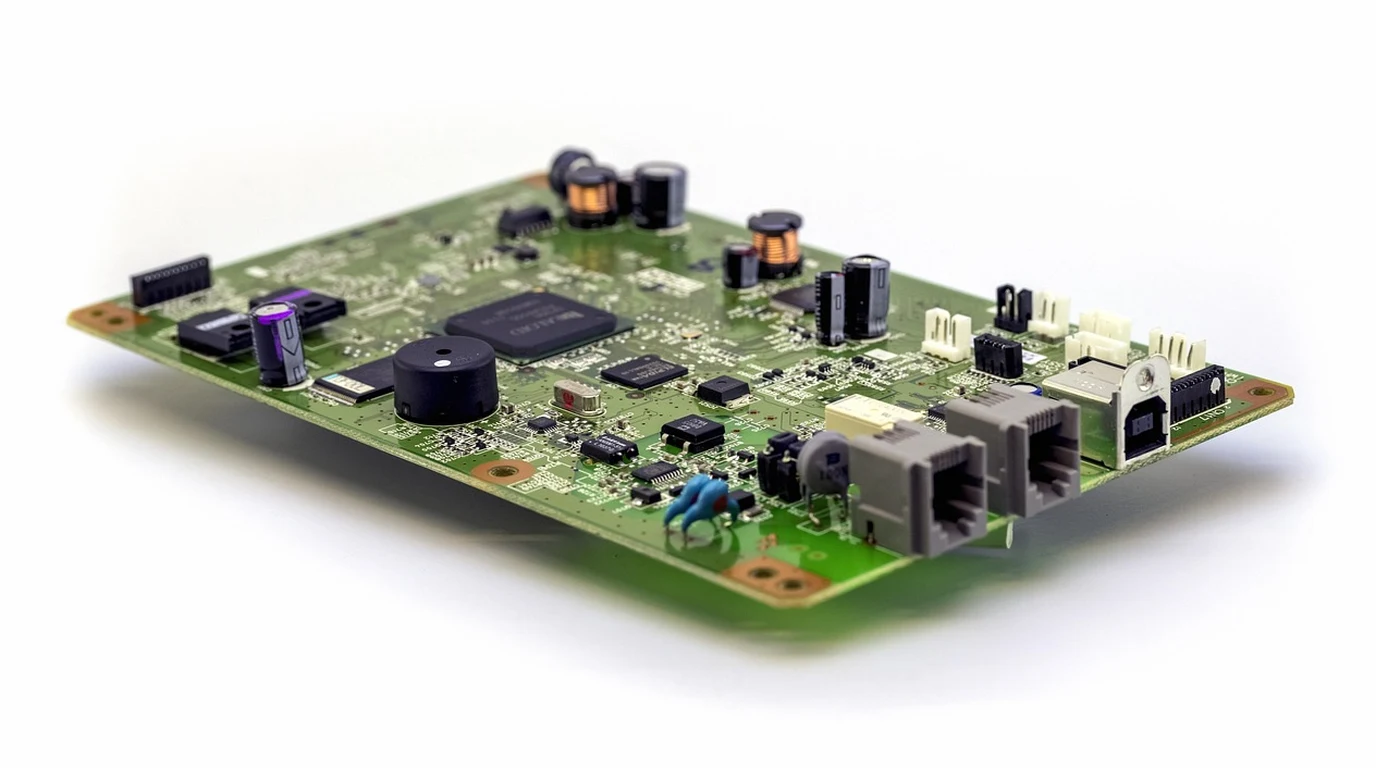
You’ve just unboxed an ARM single-board computer, flashed a fresh OS image to an NVMe drive, and booted into a headless server environment—only to watch your network throughput collapse under load, or your edge vision model stall because the kernel can’t interface cleanly with the NPU. It’s an infuriating experience that far too many homelab engineers and edge hardware architects face. You spend $150 to $600 on high-end ARM silicon expecting x86-level workstation performance, but end up bogged down in driver fragmentation, thermal throttling, and poor board routing.
The Rockchip RK3588 system-on-chip (SoC) has fundamentally changed the price-to-performance ratio for edge computing. Offering an octa-core CPU layout, a Mali-G610 MP4 GPU, and a dedicated 6 TOPS Neural Processing Unit (NPU), it comfortably outperforms legacy Raspberry Pi architectures. However, buying an RK3588 board isn’t as simple as picking a processor. The underlying hardware implementation—how manufacturers like Orange Pi, Radxa, and Firefly break out PCIe lanes, manage thermal dissipation, and supply kernel BSPs (Board Support Packages)—determines whether your project thrives or falters.
For high-density networking, homelabs, and virtualized edge nodes, buy the Orange Pi 5 Plus due to its dual 2.5GbE interfaces and dedicated PCIe 3.0 x4 M.2 throughput. For mainline Linux driver development and software longevity, choose the Radxa Rock 5B. For industrial NAS deployments requiring raw SATA channels, select the Firefly ITX-3588J.
How Does the Rockchip RK3588 Silicon Perform Under Heavy Edge Workloads?
To understand why these three boards behave so differently, we first need to look at the silicon powering them. The Rockchip RK3588 is manufactured on an 8nm LP process, featuring an asymmetric octa-core CPU layout based on ARM’s DynamIQ architecture. It groups four high-performance ARM Cortex-A76 cores clocked up to 2.4 GHz alongside four energy-efficient ARM Cortex-A55 cores running up to 1.8 GHz.
       +-------------------------------------------------------+
       |             ROCKCHIP RK3588 SILICON BUS               |
       +---------------------------+---------------------------+
                                   |
         +-------------------------+-------------------------+
         |                                                   |
+--------v--------+                                 +--------v--------+
| 4x Cortex-A76   |                                 | 4x Cortex-A55   |
| (Up to 2.4 GHz) |                                 | (Up to 1.8 GHz) |
+--------+--------+                                 +--------+--------+
         |                                                   |
         +-------------------------+-------------------------+
                                   |
    +------------------------------+------------------------------+
    |                              |                              |
+---v-------------+      +---------v-------+            +---------v-------+
|  Mali-G610 MP4  |      |  Tri-Core NPU   |            | Hardware Video  |
|  (Graphics/CL)  |      |   (6 TOPS INT8) |            | (8K60 En/Decode)|
+-----------------+      +-----------------+            +-----------------+
This hybrid arrangement allows the system to route background OS tasks and lightweight telemetry to the A55 cluster while preserving the high-throughput A76 cores for heavy compute jobs like real-time video transcode pipelines, database indexing, and container orchestration.
The SoC integrates a Mali-G610 MP4 GPU supporting OpenGL ES 3.2, OpenCL 2.2, and Vulkan 1.2. For multimedia setups, it features a dedicated hardware video processing engine capable of 8K@60fps H.265/VP9/AV1 decoding and 8K@30fps H.264/H.265 encoding. This hardware decoder allows an RK3588 board to process multiple high-resolution IP camera streams concurrently without straining the main CPU cores.
For artificial intelligence workloads at the edge, the built-in 6 TOPS NPU uses a tri-core design. These three NPU cores can operate co-operatively on a single large inference task or process three separate model pipelines independently. Operating via Rockchip’s proprietary RKNN-Toolkit2 runtime, the NPU delivers sub-10ms inference latencies for object detection models like YOLOv8 and classification models like ResNet-50 when quantized to INT8 precision.
+-------------------------------------------------------------------+
|                        RKNN-TOOLKIT2 FLOW                         |
|                                                                   |
|  [ PyTorch / ONNX Model ] ---> [ RKNN-Toolkit2 Quantization ]    |
|                                            |                      |
|                                            v                      |
|  [ RK3588 System Execution ] <--- [ Compiled .rknn Binary ]       |
|                |                                                  |
|                +---> [ Core 0 ] [ Core 1 ] [ Core 2 ]             |
|                        (6 TOPS Total INT8 Throughput)             |
+-------------------------------------------------------------------+
The primary engineering challenge with the RK3588 is not a lack of compute headroom—it’s managing hardware I/O distribution. The SoC exposes up to 28 PCIe 3.0/2.1 lanes, multiplexed across SATA 3.0, USB 3.1 Gen1, and PCIe interfaces. How each single-board computer vendor routes these lanes onto physical PCB traces dictates the board’s thermal footprint, storage speed, and practical real-world expansion capabilities.
Which RK3588 Board Layout Best Fits Your Hardware Architecture?
While all three boards use the same core processor, their physical forms, port selections, and lane configurations cater to entirely different deployment targets. Let me break down how each vendor routes the silicon’s high-speed interfaces.
+-------------------------------------------------------------------+
|                     ORANGE PI 5 PLUS LAYOUT                       |
|                                                                   |
| [Dual 2.5GbE]  [HDMI In]  [2x HDMI Out]  [M.2 PCIe 3.0 x4 Slot]   |
|   (RTL8125BG)  (Capture)  (8K + 4K)      (Up to 3,200 MB/s NVMe)  |
+-------------------------------------------------------------------+

+-------------------------------------------------------------------+
|                       RADXA ROCK 5B LAYOUT                        |
|                                                                   |
| [Single 2.5GbE]  [HDMI 2.1 Out]  [M.2 M-Key PCIe 3.0 x4]           |
| (Compact Form)   (8K Display)    (Mainline Linux Optimized)       |
+-------------------------------------------------------------------+

+-------------------------------------------------------------------+
|                     FIREFLY ITX-3588J LAYOUT                      |
|                                                                   |
| [Mini-ITX Board] [4x SATA 3.0] [PCIe x4 Slot] [Industrial Range]  |
| (170x170mm)      (Native Array)(Standard Card) (-40°C to 85°C)   |
+-------------------------------------------------------------------+
1. Orange Pi 5 Plus: The High-Density Networking Champion
The Orange Pi 5 Plus is built specifically for edge networking, micro-server clusters, and hardware KVM solutions. Orange Pi designed the board around a generous 100 x 75 mm footprint, breaking out two dedicated 2.5 Gigabit Ethernet ports powered by dual Realtek RTL8125BG PCIe controllers.
Crucially, the board features a full-length M.2 Key-M slot wired directly with four PCIe 3.0 lanes, unlocking native read/write speeds over 3,200 MB/s when paired with modern NVMe drives. Orange Pi also routed a dedicated HDMI 2.0 input port alongside two HDMI 2.1 outputs. The HDMI input connects directly to the RK3588’s video processing subsystem, enabling low-latency 4K@60fps video capture. This makes the Orange Pi 5 Plus an ideal candidate for hardware remote management interfaces (like Pi-KVM) and edge video stream ingest engines.
2. Radxa Rock 5B: The Mainline Linux Developer’s Workhorse
The Radxa Rock 5B adopts the classic credit-card form factor (100 x 72 mm) with a focus on upstream software compatibility and clean circuit layouts. Radxa provides a single 2.5GbE interface, an M.2 Key-M PCIe 3.0 x4 slot on the bottom of the PCB, and an M.2 Key-E slot for Wi-Fi 6E/Bluetooth 5.2 expansion modules.
Where Radxa clearly wins is software support and open-source driver contributions. Radxa’s engineering team maintains close ties with the upstream Linux kernel community and Collabora. Consequently, the Rock 5B offers the cleanest mainline kernel integration (Linux 6.x+) and superior community distribution support through projects like Armbian and Joshua Riek’s Ubuntu overlay. If you need a stable platform that avoids vendor lock-in on outdated 5.10 BSP kernels, the Rock 5B is the benchmark choice.
3. Firefly ITX-3588J: The Industrial Appliance Powerhouse
The Firefly ITX-3588J abandons the compact SBC model entirely in favor of a standard Mini-ITX motherboard form factor (170 x 170 mm). It targets industrial control systems, edge storage arrays, and commercial digital signage backplanes that fit into standard rackmount or desktop chassis.
Firefly leverages the RK3588’s flexible PCIe and SATA lane multiplexing to expose up to four native SATA 3.0 storage interfaces, a standard desktop PCIe x4 expansion slot, onboard RS232/RS485 industrial serial headers, and flexible 12V DC or standard ATX power inputs. Rated for extended thermal operation (-20°C to 60°C operating environments, with specialized industrial variants available up to 85°C), the ITX-3588J functions as a drop-in replacement for low-power x86 Mini-ITX motherboards. However, this engineering standard comes with a significant price tag, often costing three times as much as an Orange Pi or Radxa board.
What Are the Critical Architectural Pitfalls in RK3588 Hardware Selection?
Choosing an RK3588 single-board computer involves balancing several real-world trade-offs. The table below details the performance characteristics and resource allocations across all three designs:
| Hardware Parameter | Orange Pi 5 Plus | Radxa Rock 5B | Firefly ITX-3588J |
|---|---|---|---|
| Form Factor | Custom SBC (100 x 75 mm) | PICO-ITX / SBC (100 x 72 mm) | Standard Mini-ITX (170 x 170 mm) |
| Networking I/O | 2x 2.5GbE (RTL8125BG) | 1x 2.5GbE (RTL8125BG) | 2x 1GbE (Gigabit Realtek) |
| Storage Interfaces | 1x M.2 PCIe 3.0 x4, eMMC slot | 1x M.2 PCIe 3.0 x4, eMMC slot | 4x SATA 3.0, 1x M.2 NVMe, eMMC |
| PCIe Expansion | M.2 Key-E (PCIe 2.1 x1) | M.2 Key-E (PCIe 2.1 x1) | Standard Open-Ended PCIe x4 Slot |
| Video Capture / Inputs | 1x HDMI Rx (Up to 4K@60fps) | 1x Micro-HDMI Rx (1080p@60fps) | 1x HDMI Rx, MIPI-CSI Inputs |
| Thermal & Operating Range | 0°C to 60°C (Requires Active Fan) | 0°C to 60°C (Requires Active Fan) | Industrial Option (-40°C to 85°C) |
| Estimated Unit Price | ~$120 – $185 (16GB RAM) | ~$145 – $210 (16GB RAM) | ~$450 – $650 (16GB RAM) |
The biggest mistake engineers make when working with these boards is underestimating thermal dissipation under sustained combined stress. When the Cortex-A76 cores run at full turbo (2.4 GHz) alongside an active RKNN inference pipeline, system power draw jumps from a idle baseline of 3.5 watts up to 14–18 watts.
Without an active fan and a high-grade aluminum heatsink, the RK3588 reaches its thermal threshold (85°C) in under two minutes of sustained stress. Once thermal throttling kicks in, the system downclocks the Cortex-A76 cores to 1.8 GHz or lower, causing unpredictable latency spikes in real-time workloads.
       UNCOOLED VS ACTIVELY COOLED RK3588 THERMAL TRAJECTORY
  Temp (°C)
   90°C +------------------------------------ Thermal Throttle Limit (85°C)
        |                                 /-------- (Passive Sink Only)
   80°C |                                /
        |                               /
   70°C |                              /
        |                             /
   60°C |                            /
        |                           /
   50°C |  +-----------------------+------------ (Active Fan Cooling)
        |  | Stable Oper. Band ~52°C
   40°C +--+-------------------------------------------------------------
        0s   30s   60s   90s   120s  150s  180s   (Continuous Load Time)
A second critical pitfall involves power supply selection. The RK3588 requires high transient currents. Attempting to power an Orange Pi 5 Plus or Radxa Rock 5B with a generic 5V/3A phone charger will cause random USB resets, NVMe file-system corruption, or Kernel Panics during power spikes. To maintain solid stability across all system buses, you must supply power using a dedicated 5V/5A USB-PD block or a steady 12V DC supply (for the Firefly motherboard).
Finally, pay close attention to software BSP maturity. While Linux distributions like Joshua Riek’s Ubuntu provide an exceptional desktop and server experience on legacy 5.10 kernels, moving to upstream mainline Linux (6.x+) means sacrificing some proprietary hardware-accelerated drivers. Features like hardware video encoding/decoding and full 6 TOPS NPU access rely on Rockchip’s custom user-space driver stacks. If your project relies on the RKNN NPU pipeline, you will need to stick with Rockchip’s optimized Linux kernel release or deploy within vendor-validated Docker environments.
How Do Real-World Thermal and NPU Benchmarks Compare Across Boards?
When evaluating these three boards under real-world compute and thermal stress, synthetic benchmarks tell an important story. Across multi-threaded operations, the RK3588 consistently posts Geekbench 5 multi-core scores between 3,050 and 3,250, placing its raw compute throughput on par with mid-range x86 processors like the Intel N100, but at a fraction of the total power consumption.
                  GEEKBENCH 5 MULTI-CORE PERFORMANCE
  +-----------------------------------------------------------------+
  | Intel N100 (x86, 6W TDP)             |===================| 3150 |
  | Rockchip RK3588 (ARM, ~12W Under Load)|====================| 3210|
  | Raspberry Pi 5 (BCM2712, 12W Load)   |==========| 1680           |
  +-----------------------------------------------------------------+
Edge AI Latency Benchmarks (RKNN-Toolkit2)
Running edge vision networks through the tri-core NPU demonstrates clear low-latency performance when using INT8 quantization:
- YOLOv8 Nano (320×320 input): 3.8 ms inference latency (~263 FPS)
- YOLOv8 Small (640×640 input): 9.2 ms inference latency (~108 FPS)
- ResNet-50 (224×224 input):