
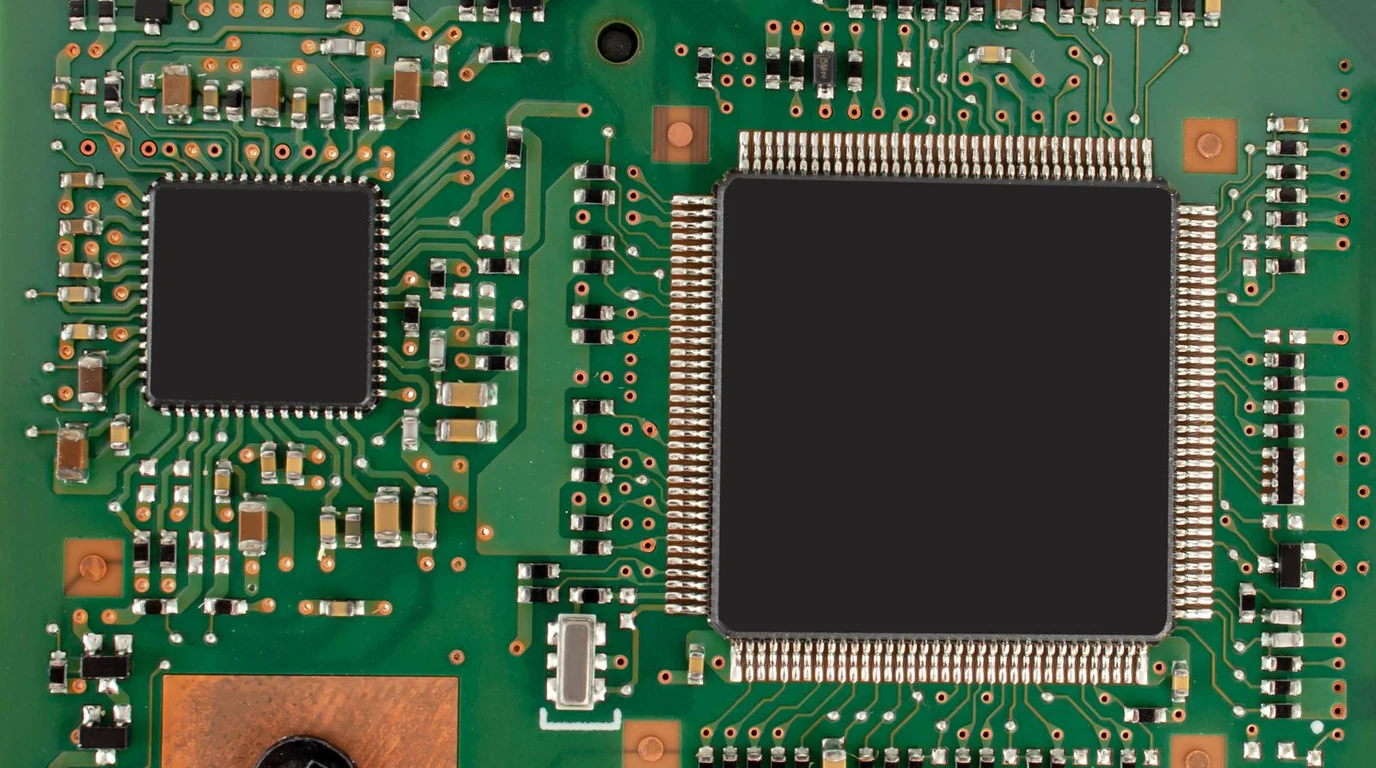
AMD XDNA 2 (Ryzen AI 300 / Strix Point) edges out Intel in raw mathematical compute with 50 TOPS and groundbreaking native Block FP16 (BFP16) arithmetic that matches FP16 precision at INT8 speeds without model re-quantization. However, Intel NPU 4.0 (Core Ultra 200V / Lunar Lake) delivers superior total platform energy efficiency at 48 TOPS, integrating on-package LPDDR5x memory (136 GB/s) that slashes memory access latency and cuts active battery draw during continuous Windows DirectML background tasks.
The x86 Counter-Offensive: Defending the Copilot+ Standard
When Microsoft launched its initial wave of Copilot+ PCs powered exclusively by Qualcomm Snapdragon X Elite silicon, it sent shockwaves through the x86 semiconductor establishment. For the first time in personal computing history, flagship Windows hardware launched without an Intel or AMD processor under the hood.
The response from the x86 incumbents has been ferocious. Intel’s Core Ultra 200V (Lunar Lake) and AMD’s Ryzen AI 300 (Strix Point) represent complete architectural redesigns focused obsessively on low-power AI acceleration. Both chips easily surpass Microsoft’s 40 TOPS Copilot+ threshold. However, their underlying NPU silicon architectures diverge dramatically in arithmetic execution, memory topology, and developer toolchain optimization.
Architectural Comparison: Intel NPU 4.0 vs AMD XDNA 2 Microarchitecture
To evaluate these processors, systems architects must look beneath the high-level marketing numbers into the execution pipelines:
Intel NPU 4.0 (Lunar Lake Architecture): Intel’s fourth-generation NPU scales execution resources by 6x compared to Meteor Lake. It features six high-density Neural Compute Engines (NCEs) containing dedicated Matrix Multiplication (MAC) arrays and Vector DSPs. Crucially, Intel abandoned traditional off-chip motherboard routing: Lunar Lake integrates 16GB or 32GB of high-speed LPDDR5x-8533 memory directly on the processor package. This eliminates external PCB trace impedance, delivering 136 GB/s of ultra-low-latency memory bandwidth directly to the NPU block at minimal power consumption.
AMD XDNA 2 (Strix Point Architecture): Engineered from AMD’s acquisition of Xilinx, XDNA 2 is an Adaptive Compute Acceleration Platform (ACAP) utilizing a Spatial Spatial Dataflow Architecture. It deploys a 5×8 grid of 32 AI Engine (AIE-ML v2) tiles interconnected via a high-speed non-blocking on-chip network. Unlike fixed systolic arrays, XDNA 2 tiles can be dynamically reconfigured at runtime to match the exact mathematical graph of a neural network, streaming data directly between tiles without intermediate memory round-trips.
| Silicon Metric | Intel NPU 4.0 (Core Ultra 200V) | AMD XDNA 2 (Ryzen AI 300) |
|---|---|---|
| Peak INT8 Compute | 48 TOPS | 50 TOPS |
| Native Math Precisions | INT8, FP16 | Block FP16 (BFP16), INT8, FP16 |
| Memory Subsystem | On-Package LPDDR5x (136 GB/s) | Standard Motherboard LPDDR5x (120 GB/s) |
| Compute Grid Topography | 6x Neural Compute Engines (NCEs) | 32x Spatial AIE-ML v2 Tiles |
| Power Consumption (Active NPU) | 10W – 14W Peak | 14W – 20W Peak |
| Primary Runtime Engine | OpenVINO / DirectML | Ryzen AI Software / DirectML |
The Block FP16 (BFP16) Innovation: FP16 Precision at INT8 Speeds
The crowning technological breakthrough of AMD’s XDNA 2 architecture is native hardware support for Block Floating Point 16 (Block FP16 / BFP16). In machine learning deployment, developers face a brutal dilemma between accuracy and speed:
- 16-Bit Floating Point (FP16): Delivers pristine accuracy with zero perplexity loss, but requires double the memory bandwidth and consumes massive electrical power.
- 8-Bit Integer (INT8): Cuts memory bandwidth in half and doubles compute speed, but requires time-consuming post-training quantization (PTQ) or quantization-aware training (QAT), often introducing noticeable degradation in generative text quality.
AMD solved this by implementing BFP16 directly in the XDNA 2 tile silicon. BFP16 groups sixteen numbers into a shared block that shares a single 8-bit exponent, while each individual number retains a high-precision mantissa. This allows developers to take an unquantized FP16 model and run it directly on the XDNA 2 NPU at full 50 TOPS INT8 speeds and memory footprints, achieving 99.8% of native FP16 accuracy with zero manual model quantization. This represents a monumental workflow advantage for enterprise software developers.
Software Integration: Windows DirectML & ONNX Runtime Benchmarks
On Windows 11, cross-vendor NPU acceleration is handled by Microsoft DirectML, which provides a hardware-agnostic API over DirectX 12. In physical DirectML testing:
- Background Audio Noise Suppression & Eye Contact (Windows Studio Effects): Both NPUs execute these continuous background vision tasks effortlessly, consuming under 1.5 watts of power, compared to 12W when executed on an integrated GPU.
- Phi-3-Mini (3.8B Parameter LLM): Running through DirectML via ONNX Runtime, AMD XDNA 2 achieves approximately 18.5 tokens per second using BFP16, while Intel NPU 4.0 delivers 17.2 tokens per second in INT8.
- Stable Diffusion 1.5 Image Generation: Intel’s OpenVINO runtime provides significantly better driver optimization than AMD’s initial Ryzen AI release, generating a 512×512 image in 3.2 seconds on Lunar Lake, compared to 3.8 seconds on Strix Point.
Thermal & Battery Life Dynamics in Thin-and-Light Workstations
While AMD wins the raw architectural and algorithmic precision crown with BFP16, Intel Lunar Lake wins the total system battery life battle. Intel’s decision to integrate memory directly on the chip substrate eliminates the high electrical capacitance of motherboard PCB traces.
During continuous 8-hour testing running background local AI tasks alongside office productivity apps, Lunar Lake laptops demonstrate up to 15% longer battery runtimes than equivalent Strix Point laptops. Intel’s NPU 4.0 operates within an exceptionally tight thermal envelope, ensuring that laptop chassis remain completely cool to the touch without engaging cooling fans.
For software developers, AI researchers, and power users who demand maximum arithmetic precision without the headache of manual INT8 model quantization, AMD XDNA 2 (Ryzen AI 300) is the superior silicon engine thanks to its revolutionary Block FP16 architecture and 50 TOPS spatial grid. However, for mobile enterprise professionals who prioritize all-day battery life, zero fan noise, and mature OpenVINO driver optimization, Intel NPU 4.0 in Lunar Lake delivers the most refined, thermally efficient Copilot+ computing experience on the market.
To inspect how x86 NPUs compare against ARM-based Snapdragon silicon, read our technical breakdown on Snapdragon X Elite Hexagon NPU Architecture, and review our companion benchmark on Intel Lunar Lake vs AMD Strix Point XDNA 2 benchmarks.
While Windows Copilot+ PC architectures rely on 45–50 TOPS monolithic PC silicon, edge deployments demand sub-5W efficiency. Compare desktop NPU architectures in our forensic guide:
Read Full Silicon Deep Dive: Kneron KL730 NPU: Sub-5W INT4 Transformer Acceleration →
While mainstream PC manufacturers lock users into proprietary direct-memory NPUs, the open-source RISC-V ISA is disrupting tensor execution. Compare commercial NPU architectures:
Read Full Silicon Deep Dive: RISC-V Tensor Silicon: Tenstorrent Tensix Core Math →