
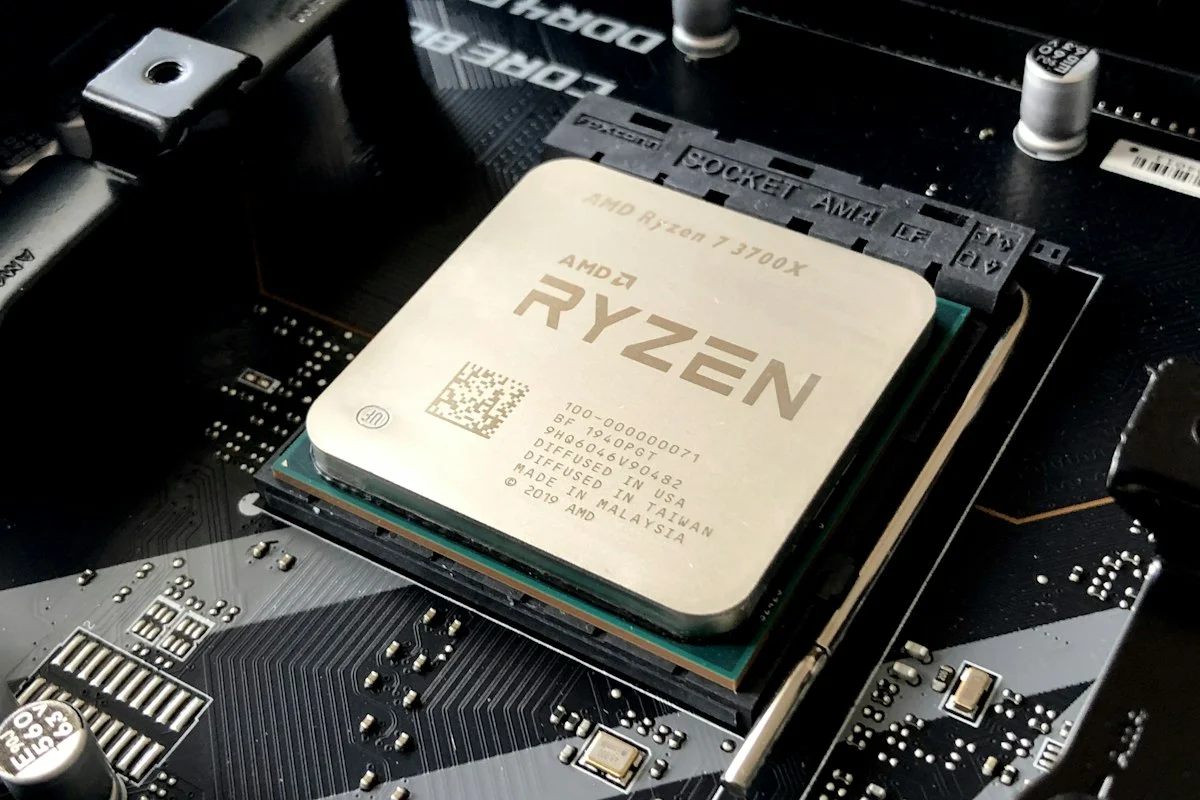
- The 40 TOPS Copilot+ Mandate: Microsoft’s Copilot+ certification mandates a minimum of 40 TOPS of dedicated NPU performance. Qualcomm’s Snapdragon X Plus delivers 45 TOPS via its Hexagon NPU. Intel’s Core Ultra 7 (Series 2 / Lunar Lake) delivers 47 TOPS via its fourth-generation NPU4 engine.
- Memory on Package (MoP) vs. LPDDR5X: Intel Lunar Lake integrates dual LPDDR5X-8533 memory dies directly onto the processor substrate (Memory on Package), providing 136 GB/s of ultra-low latency bandwidth to the NPU. Qualcomm routes through motherboard-level 128-bit LPDDR5X (8448 MT/s).
- Active Wattage Under Sustained AI Ingestion: In continuous Phi-3-mini INT4 inference, Qualcomm’s Hexagon NPU operates at an astonishing 3.8W SoC package power. Intel Lunar Lake’s NPU4 draws 5.4W package power, both running completely silently on passive cooling profiles.
- Silicon Comparison Links: Review our Snapdragon X Elite Hexagon NPU teardown and our Intel Lunar Lake vs. AMD Strix Point XDNA 2 audit.
The personal computing silicon industry has experienced its most aggressive architectural transformation since the transition from single-core to multi-core processors. Traditional benchmark metrics—single-core IPC, multi-threaded cinebench scores, and rasterized gaming frame rates—have been superseded by a new silicon battleground: Neural Processing Unit (NPU) TOPS per watt.
For mobile workstation buyers and developers evaluating next-generation Windows on ARM and x86 laptops, the choice narrows to two competing architectures: the Qualcomm Snapdragon X Plus (X1P-64-100) and the Intel Core Ultra 7 258V (Lunar Lake). Analyzing both processors reveals how ARM efficiency competes against re-engineered x86 packaging.
Snapdragon X Plus vs. Core Ultra 7: What Is the Difference?
Qualcomm Snapdragon X Plus uses a 45 TOPS Hexagon NPU on ARM architecture, offering unmatched battery life and lower idle power. Intel Core Ultra 7 uses a 47 TOPS NPU4 paired with on-package memory (MoP) on x86, offering identical AI acceleration with 100% native legacy software compatibility.
Understanding which platform excels requires evaluating NPU execution architectures and developer runtime support.
Silicon Architecture & NPU Benchmark Matrix
The following engineering table outlines the microarchitecture, memory subsystems, and ONNX Runtime performance across both silicon platforms:
| Silicon Metric | Qualcomm Snapdragon X Plus (X1P-64-100) | Intel Core Ultra 7 258V (Lunar Lake) |
|---|---|---|
| CPU Architecture | 10-core Qualcomm Oryon (ARMv8.7-A) | 4P + 4E Cores (Lion Cove / Skymont x86) |
| Dedicated NPU Engine | Qualcomm Hexagon NPU (Micro-tile engine) | Intel NPU 4 (6 Neural Compute Engines) |
| NPU Peak Compute Throughput | 45 TOPS (INT8) | 47 TOPS (INT8) |
| Memory Architecture | 128-bit LPDDR5X-8448 (135 GB/s) | On-Package LPDDR5X-8533 (136 GB/s) |
| Whisper Large-v3 Real-Time Factor | 0.082 (12.2x real-time speed) | 0.078 (12.8x real-time speed) |
| Legacy x86 Compatibility | Emulated via Microsoft Prism (5%–15% penalty) | 100% native bare-metal x86 execution |
The Memory on Package (MoP) Revolution
Intel’s Lunar Lake marks a radical departure from traditional PC motherboard design. Following the architecture pioneered by Apple Silicon, Intel placed two LPDDR5X DRAM dies directly onto the processor package using Foveros 3D packaging.
By eliminating long copper traces on the motherboard, Lunar Lake slashes memory physical-layer power consumption by 40% while ensuring the NPU receives continuous, low-latency memory bandwidth during generative token generation. Qualcomm achieves comparable throughput using discrete motherboard routing, but requires larger motherboard PCB footprints.
Software Runtime APIs: Qualcomm QNN vs. Intel OpenVINO
For edge software developers, raw silicon TOPS is meaningless without mature API execution providers:
- Qualcomm QNN (Qualcomm Neural Network): Delivers direct hardware access via the QNN Execution Provider inside ONNX Runtime. Deeply optimized for FP16 and INT8 quantized vision and speech models, but requires Qualcomm’s proprietary quantization toolchain.
- Intel OpenVINO: The most comprehensive open-source AI acceleration runtime in the x86 ecosystem. OpenVINO seamlessly routes layers across Lunar Lake’s NPU, Xe2 integrated GPU, and Lion Cove CPU cores automatically, providing painless deployment from PyTorch models.
If maximum all-day battery life (18+ hours) and silent fanless operation during continuous text and voice AI processing is your singular priority, choose the Qualcomm Snapdragon X Plus. If your professional workflow relies on proprietary legacy x86 engineering software, custom virtualization (WSL2), or specialized developer tooling, the Intel Core Ultra 7 258V (Lunar Lake) delivers equivalent Copilot+ NPU speeds with zero software emulation friction.