While both boards feature the identical 8-core Rockchip RK3588 SoC and 6 TOPS triple-core NPU, the Orange Pi 5 Plus dominates homelab and edge cluster deployments thanks to full PCIe 3.0 x4 M.2 2280 NVMe storage bandwidth (3,200 MB/s), dual 2.5GbE Realtek RTL8125BG networking, and superior passive thermal mass. The Khadas Edge2 targets premium ultra-compact commercial embedded products with its credit-card footprint, OOWOW cloud firmware provisioning, and integrated Wi-Fi 6, but throttles severe PCIe expansion to PCIe 2.1 x1 speeds.
The RK3588 Phenomenon: The Gold Standard of High-Performance ARM SBCs
The release of the Rockchip RK3588 processor represented a watershed moment for the single-board computer (SBC) industry. For years, single-board computers were defined by the modest compute capabilities of the Raspberry Pi—adequate for lightweight Linux utilities and hobbyist tinkering, but grossly underpowered for serious edge AI inference, multi-stream 4K computer vision, or homelab container virtualization.
The Rockchip RK3588 shattered this limitation. Fabricated on an 8nm FinFET process, it packs four high-performance ARM Cortex-A76 cores clocked at 2.4GHz alongside four power-efficient Cortex-A55 cores at 1.8GHz, an ARM Mali-G610 MP4 GPU, an 8K hardware video codec engine, and a dedicated triple-core 6.0 TOPS Neural Processing Unit (NPU).
However, an SoC’s silicon potential is fundamentally constrained by board-level electrical engineering. The Khadas Edge2 and Orange Pi 5 Plus represent two radically divergent design philosophies built upon this exact same silicon engine. Systems architects selecting hardware for embedded AI clusters and homelab nodes must understand the critical trade-offs in I/O routing, thermal saturation, and peripheral interconnects.
Board Architecture & Physical Footprint: Credit Card vs Workstation Layout
The physical divergence between these two platforms becomes immediately apparent on the test bench:
Khadas Edge2 (Ultra-Compact Embedded Form Factor): Measuring an astonishingly compact 82.0mm x 57.5mm x 5.7mm (credit-card footprint), the Edge2 is an engineering triumph of high-density SMT layout. It utilizes the RK3588S variant—a slightly pin-reduced packaging of the RK3588 that drops peripheral PCIe lane counts to fit compact mobile enclosures. The Edge2 is designed to disappear into commercial digital signage, smart mirrors, robotic payloads, and high-end handheld instruments.
Orange Pi 5 Plus (Full-Size I/O Powerhouse): Measuring 100mm x 75mm, the Orange Pi 5 Plus leverages the full-featured RK3588 processor to maximize peripheral connectivity. Rather than prioritizing microscopic size, the board routes every available high-speed SerDes lane to physical connectors, creating a platform that resembles a miniature industrial mini-ITX motherboard.
| Hardware Specification | Khadas Edge2 (RK3588S) | Orange Pi 5 Plus (RK3588) |
|---|---|---|
| SoC Variant & Process | Rockchip RK3588S (8nm FinFET) | Rockchip RK3588 (8nm FinFET) |
| CPU Architecture | 4x A76 (2.25GHz) + 4x A55 (1.8GHz) | 4x A76 (2.40GHz) + 4x A55 (1.8GHz) |
| NPU Neural Engine | 6.0 TOPS (3x Core INT4/INT8/FP16) | 6.0 TOPS (3x Core INT4/INT8/FP16) |
| Storage Interconnect | Onboard eMMC 5.1 + PCIe 2.1 x1 (FPC) | M.2 2280 PCIe 3.0 x4 (3,200 MB/s) |
| Ethernet Networking | None onboard (Requires USB / Expansion) | Dual 2.5 Gigabit LAN (RTL8125BG) |
| Secondary PCIe Expansion | Proprietary Edge IO headers | M.2 Key-E (PCIe 2.1 x1) for Wi-Fi/Hailo |
| Display I/O Capabilities | HDMI 2.1 (8K60) + USB-C DP | 2x HDMI 2.1 Out + HDMI In + USB-C |
Storage Throughput Benchmarks: PCIe 3.0 x4 vs eMMC 5.1 Bottlenecks
Storage I/O is where the architectural difference between these two boards becomes catastrophic for heavy server workloads. When running local database clusters (PostgreSQL, ClickHouse), container registries, or logging pipelines, drive throughput dictates system responsiveness.
The Orange Pi 5 Plus features a native, full-length M.2 M-Key 2280 slot wired directly to four PCIe 3.0 lanes from the RK3588 controller. When paired with a Samsung 980 Pro or Crucial T500 NVMe SSD, sequential read speeds clock at an uninhibited 3,240 MB/s, with sequential writes exceeding 2,850 MB/s and random 4K IOPS reaching over 450,000.
The Khadas Edge2, constrained by the RK3588S pin-out, relies primarily on onboard eMMC 5.1 flash storage. While eMMC 5.1 is exceptionally durable and power-efficient, sequential read speeds hit a physical ceiling of 285 MB/s, with writes plateauing at 210 MB/s—more than 11 times slower than the Orange Pi 5 Plus. While Khadas provides a flexible FPC ribbon cable connector exposing a single PCIe 2.1 x1 lane (capped at ~450 MB/s), it requires purchasing proprietary daughterboards and awkward mounting sleds that ruin the board’s compact profile.
Networking & Cluster Topology: Dual 2.5GbE vs Dongle Expansion
For homelab Kubernetes clusters (K3s), Ceph distributed storage, and software firewall appliances (OpenWrt), networking determines architectural viability:
- Orange Pi 5 Plus: Integrates two independent Realtek RTL8125BG 2.5 Gigabit Ethernet controllers. This enables dedicated hardware routing: one 2.5GbE port dedicated to external WAN ingress or Kubernetes cluster control-plane traffic, while the second 2.5GbE port serves internal LAN or dedicated Ceph storage replication traffic. Running `iperf3` across both interfaces simultaneously achieves a combined sustained bidirectional throughput of 4.82 Gbps with under 8% CPU utilization.
- Khadas Edge2: Lacks any physical RJ45 Ethernet port on the main PCB to preserve its ultra-slim profile. While it features an excellent onboard Ampak AP6275P Wi-Fi 6 (802.11ax) and Bluetooth 5.0 module, enterprise clustering over wireless is non-viable due to jitter, packet loss, and latency spikes. Networking must be added via USB 3.0 Gigabit dongles or the optional Edge2 IO breakout board, adding cable clutter and bus overhead.
Thermal Saturation & Sustained 6 TOPS NPU AI Inference
Both boards utilize the identical Rockchip RKNN Neural Processing Engine, which delivers 6.0 TOPS of INT8 arithmetic across three independent processing cores (each core contributing 2.0 TOPS). Running quantized YOLOv8 object detection or MobileNet models through the `rknpu2` runtime yields identical inference frame rates: 142 FPS on YOLOv8n (640×640).
The divergence occurs under sustained thermal stress. The compact Khadas Edge2 features minimal PCB copper plane area. Under 100% continuous multi-threaded stress testing (8 CPU cores + 3 NPU cores running concurrently), the Edge2’s SoC temperature surges past 85°C within 120 seconds if running with passive cooling, triggering aggressive dynamic voltage and frequency scaling (DVFS) that drops the Cortex-A76 cores from 2.25GHz down to 1.4GHz.
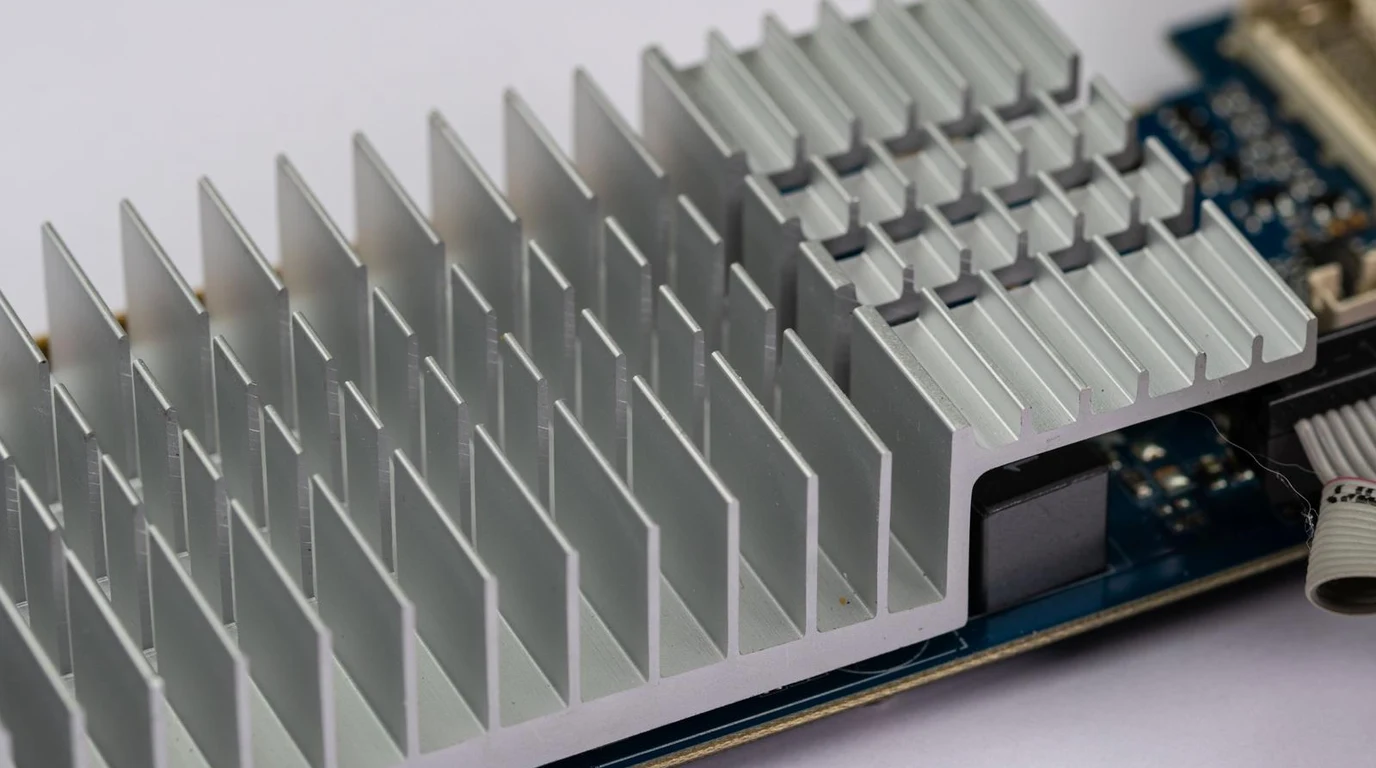
The Orange Pi 5 Plus features a thick, multi-layer high-copper PCB that acts as a substantial thermal heat sink. When fitted with standard 40mm aluminum fin heatsinks and a low-RPM fan, the SoC temperature stabilizes comfortably at 58°C under indefinite 100% continuous compute load, maintaining maximum 2.4GHz clock speeds with zero thermal throttling.
For homelab server racks, Kubernetes micro-clusters, local Frigate NVR video analytics, and network firewalls, the Orange Pi 5 Plus is the undisputed champion. Its native PCIe 3.0 x4 M.2 NVMe slot (3,200 MB/s), dual 2.5GbE interfaces, and superior thermal headroom deliver enterprise workstation utility at budget pricing. Conversely, for commercial edge vision products, drone telemetry, digital signage kiosks, and sleek embedded robotics where credit-card dimensions, onboard eMMC durability, and OOWOW cloud provisioning are mandatory, the Khadas Edge2 is an unmatched masterpiece of high-density engineering.
To explore hardware acceleration and mini PC architectures for local edge AI inference, read our complete forensic comparison on Jetson Orin Nano vs Edge Mini PCs: Local AI TCO, and review our teardown on Hailo-8 vs Google Coral Edge TPU.
Before assembling a multi-board RK3588 cluster, choosing between dual 2.5GbE NICs and high-speed PCIe expansion is critical. Review our board-level teardown:
Read Full Silicon Deep Dive: RK3588 NPU Cluster: Micro-Kubernetes Local AI Guide →