
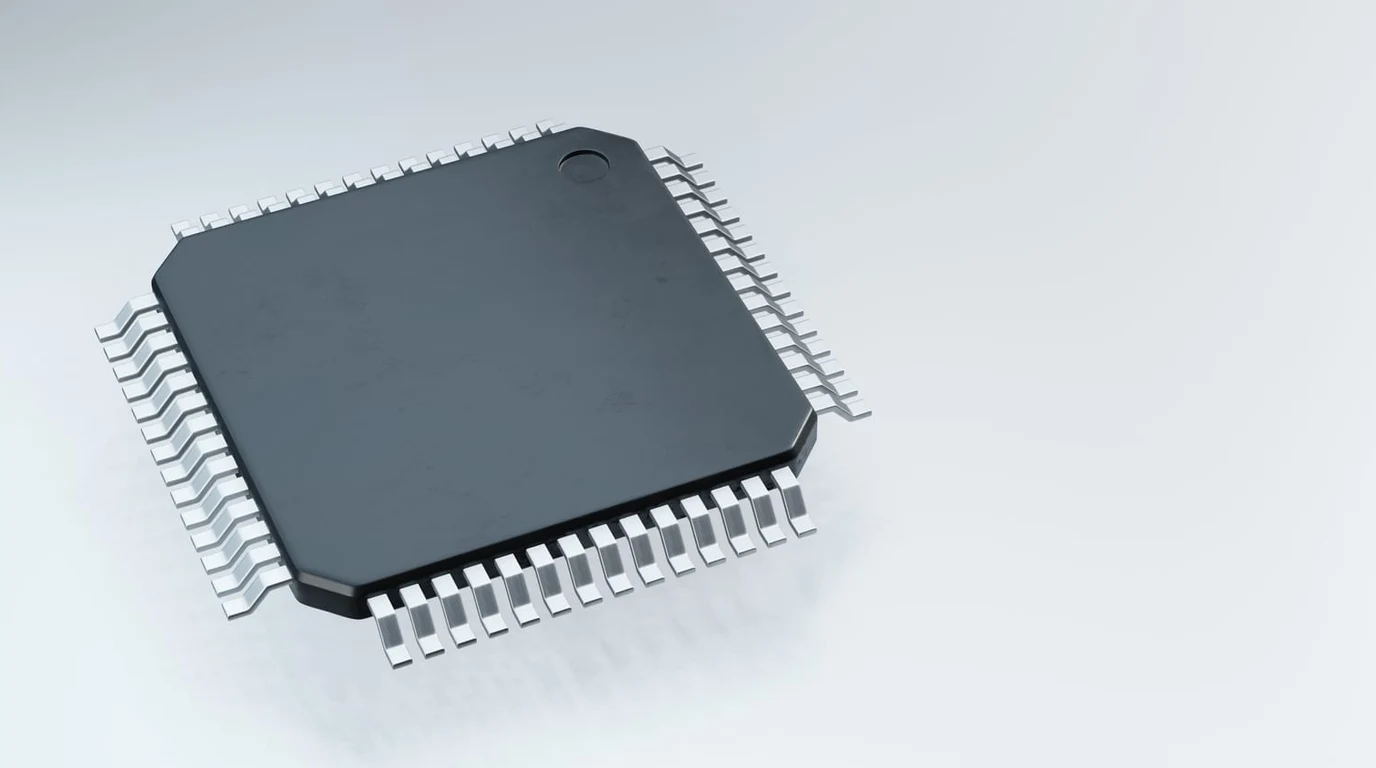
The Qualcomm Hexagon NPU delivers 45 TOPS of dedicated AI compute at an industry-leading 3.2 to 4.1 TOPS/Watt by coupling Hexagon Vector eXtensions (HVX) with dedicated 2D Tensor Accelerators and hardware-accelerated Microscaling (MXFP4 / INT4) weight decompression. While traditional GPU shaders waste up to 70% of energy fetching 16-bit floating point weights across power-hungry external DRAM buses, Hexagon’s tightly coupled 45MB system-level cache and INT4 quantization double token generation throughput while slashing memory bandwidth consumption by 50%.
The Copilot+ Silicon War: Why Raw TOPS Ratings Are Misleading
When Microsoft established its Copilot+ PC hardware standard mandating a minimum of 40 NPU TOPS (Trillion Operations Per Second), it triggered an architectural arms race across the semiconductor industry. Qualcomm, AMD, Intel, and Apple rushed to update marketing slides with soaring TOPS metrics. However, in embedded edge computing and battery-constrained mobile workstations, peak synthetic TOPS is a meaningless specification without measuring energy efficiency (TOPS/Watt) and memory subsystem saturation.
Executing modern Generative AI—such as quantized Llama-3-8B, Mistral-7B, or Phi-3-mini—on edge client silicon is fundamentally memory-bandwidth bound during the autoregressive token generation phase. A processor can feature 100 theoretical tera-ops of arithmetic logic, but if its memory controller cannot stream model weights into the compute matrix fast enough, the execution units sit completely idle in wait states. The Qualcomm Hexagon NPU found inside the Snapdragon X Elite (X1E-84-100) and Snapdragon X Plus represents one of the most sophisticated architectural solutions to this memory wall problem.
Hexagon NPU Microarchitecture: Scalar, Vector (HVX) & Matrix (HTA) Triad
Unlike discrete GPU architectures that rely on thousands of identical SIMT (Single Instruction, Multiple Threads) compute cores, the Hexagon NPU utilizes a heterogeneous three-tiered processing pipeline designed specifically for linear algebra graph execution:
- Hexagon Scalar Core: Acts as the local control processor, handling instruction dispatch, non-linear activation functions (GELU, SiLU), control flow branches, and tensor graph orchestration with ultra-low latency.
- Hexagon Vector eXtensions (HVX): Four parallel 1024-bit vector processing units executing SIMD arithmetic. HVX is optimized for element-wise tensor math, layer normalization, softmax operations, and spatial image processing pipelines.
- Hexagon Tensor Accelerator (HTA): The high-density mathematical engine. A multi-core two-dimensional systolic multiply-accumulate (MAC) array dedicated entirely to dense matrix-matrix multiplication ($GEMM$). The HTA executes the core projection and attention matrices of transformer neural networks.
- Tightly Coupled Memory (TCM) & Shared System Cache: Rather than forcing every tensor operation to round-trip across external LPDDR5x memory channels, the Hexagon NPU features dedicated high-speed low-power SRAM tightly coupled to the vector and tensor register files, supplemented by a 45MB system-level cache (SLC).
| Silicon Metric | Qualcomm Hexagon (X Elite) | Intel NPU 4.0 (Lunar Lake) | AMD XDNA 2 (Strix Point) |
|---|---|---|---|
| Peak INT8 Compute | 45 TOPS | 48 TOPS | 50 TOPS |
| Hardware INT4 / Microscaling | Native Native MXFP4 & INT4 | Emulated / Limited INT4 | Block FP16 (BFP16) Focus |
| Operating Power Envelope | 11W – 14W Peak (NPU Block) | 12W – 16W Peak | 15W – 22W Peak |
| Power Efficiency (TOPS/Watt) | 3.6 – 4.1 TOPS/Watt | 3.0 – 3.4 TOPS/Watt | 2.4 – 2.9 TOPS/Watt |
| System Memory Bus Width | 128-bit LPDDR5x-8448 (135 GB/s) | 128-bit LPDDR5x-8533 (136 GB/s) | 128-bit LPDDR5x-7500 (120 GB/s) |
| Primary Software Toolchain | Qualcomm AI Hub / ONNX QNN | OpenVINO / DirectML | Ryzen AI Software / DirectML |
The INT4 Quantization Breakthrough: Halving Memory Footprint
To understand why the Hexagon NPU outperforms competing x86 integrated GPUs during local LLM execution, systems architects must look at arithmetic precision. A standard unquantized 7-billion parameter language model stored in 16-bit floating point (FP16) requires approximately 14 Gigabytes of memory. To generate a single output token, the processor must read every single one of those 14 billion bytes across the memory bus.
Quantizing weights down to 4-bit integers (INT4) slashes model memory consumption from 14GB down to just 3.5 Gigabytes. While traditional CPUs and GPUs must convert 4-bit weights back into 16-bit floats before performing arithmetic (wasting compute cycles on decompression), the Hexagon Tensor Accelerator features native mathematical support for INT4 input tensors paired with INT32 accumulators.
Furthermore, Hexagon supports the Open Compute Project (OCP) Microscaling (MXFP4 / MXINT4) standard. Standard block quantization divides tensors into uniform blocks of 32 or 64 elements, assigning a single shared scaling factor. When outlier weights occur (common in transformer attention heads), standard INT4 quantization clips the outliers, causing catastrophic perplexity degradation and model hallucination. Microscaling assigns independent shared 8-bit scale factors to tiny sub-blocks of 16 elements, preserving outlier precision and delivering near-lossless perplexity matching native FP16 while running at full 4-bit bandwidth speeds.
Software Toolchain: ONNX Runtime, DirectML & The Qualcomm AI Hub
Silicon is only as capable as its compiler infrastructure. A frequent historical failure of specialized edge NPUs was the “walled garden SDK trap,” where deploying a custom PyTorch model required writing complex C++ kernels in proprietary vendor APIs.
Qualcomm eliminated this friction by integrating directly with Microsoft ONNX Runtime through the QNN (Qualcomm Neural Network) Execution Provider:
- Direct Execution from PyTorch: AI engineers export models directly to ONNX format using `torch.onnx.export()`. The QNN execution provider parses the ONNX computational graph, identifies supported tensor sub-graphs, and compiles them directly into Hexagon machine bytecode without manual kernel engineering.
- Graph Partitioning & Fallback: If a model contains esoteric custom operators unsupported by the HTA matrix engine, the QNN runtime automatically partitions the graph, dispatching dense matrix multiplies to the NPU while routing unsupported nodes to the Oryon CPU cores or Adreno GPU with zero application crashes.
- Windows DirectML Acceleration: For consumer desktop applications, Microsoft DirectML maps Direct3D 12 compute graphs directly into Hexagon NPU instructions, allowing applications like Adobe Photoshop, DaVinci Resolve, and local LLM runners (LM Studio / Jan) to access NPU acceleration natively.
Thermal & Power Dynamics: Sustained Fanless Edge AI Workloads
The decisive battlefield between ARM-based NPUs like Hexagon and x86 integrated GPUs is thermal throttling. When a user runs a continuous local AI workload—such as transcribing audio via Whisper-Large-v3 or maintaining a long multi-turn chat session with an 8B parameter model—an integrated GPU operating at 25W to 35W will saturate a laptop or mini PC’s cooling heatsink within 180 seconds. Fans ramp to maximum RPM, and thermal management aggressively throttles clock speeds, causing token generation rates to crater by 40%.
The Hexagon NPU executes identical INT4 transformer inference consuming merely 4 to 7 watts of active power. Because the NPU generates negligible heat, it operates indefinitely in fanless enclosures without dropping a single token per second. This thermal stability makes Hexagon the undisputed silicon architecture of choice for battery-powered industrial edge vision nodes, mobile medical diagnostics, and silent executive workstations.
Raw TOPS ratings are marketing theater; TOPS per Watt across narrow INT4 memory channels is the true metric of edge AI mastery. While AMD XDNA 2 and Intel Lunar Lake deliver formidable peak arithmetic, the Qualcomm Hexagon NPU in Snapdragon X Elite reigns supreme in energy efficiency. By pairing native Microscaled INT4 tensor execution with tightly coupled SRAM and direct ONNX QNN execution, Hexagon delivers true all-day fanless local LLM inference that leaves x86 silicon thermal-throttling in its wake.
To evaluate how Hexagon compares against embedded RISC-V compute engines, study our comprehensive technical breakdown on Tenstorrent Wormhole: RISC-V Tensix Core Architecture, and review our forensic hardware benchmark on Kneron KL830 vs Hailo-10H for sub-5W generative edge AI.